
Pipeline Renewal | Welltec PVC-K Boosts Efficiency and Cuts Costs
2026-10-22 · 12 min read · 15 views
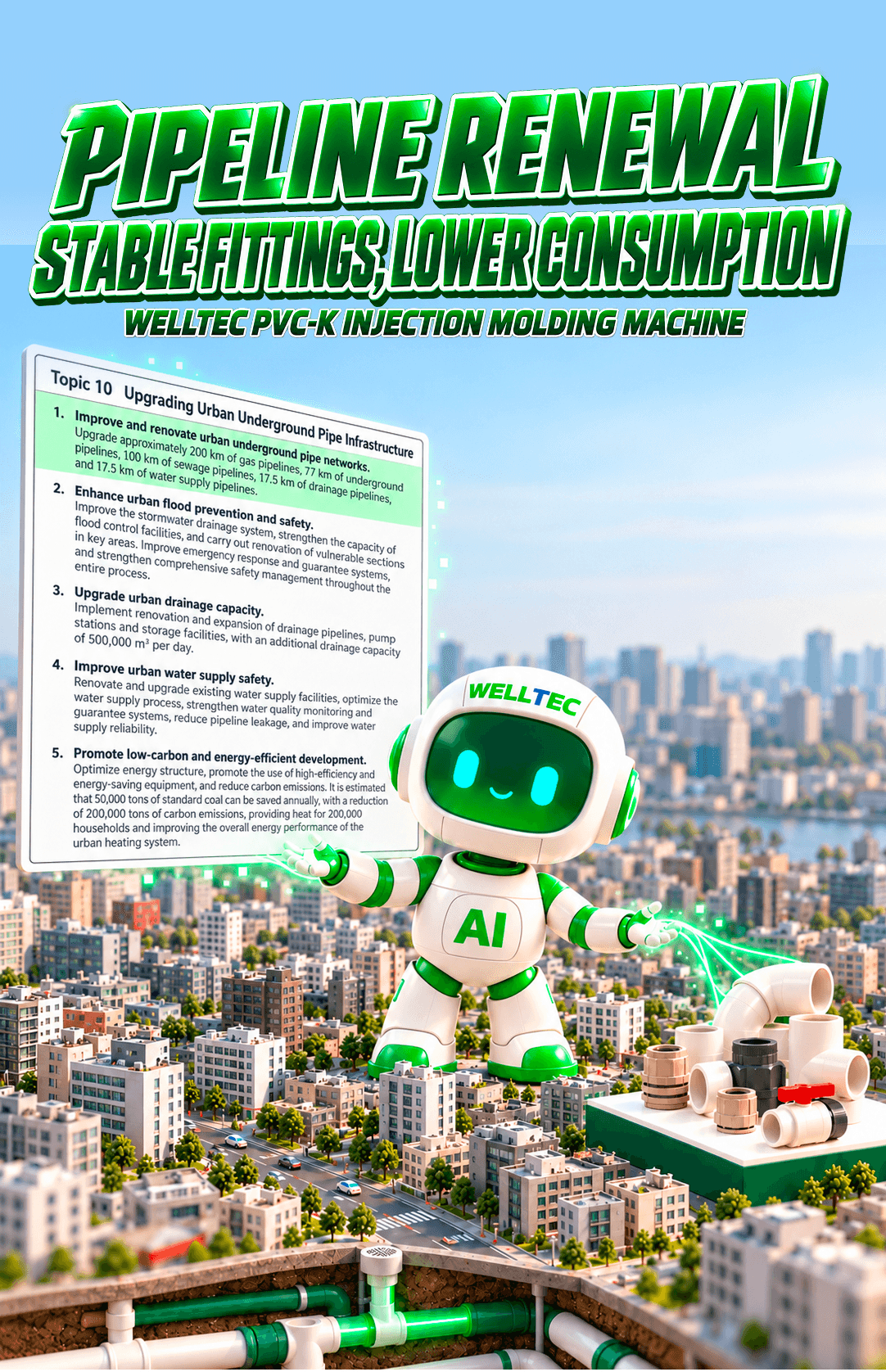
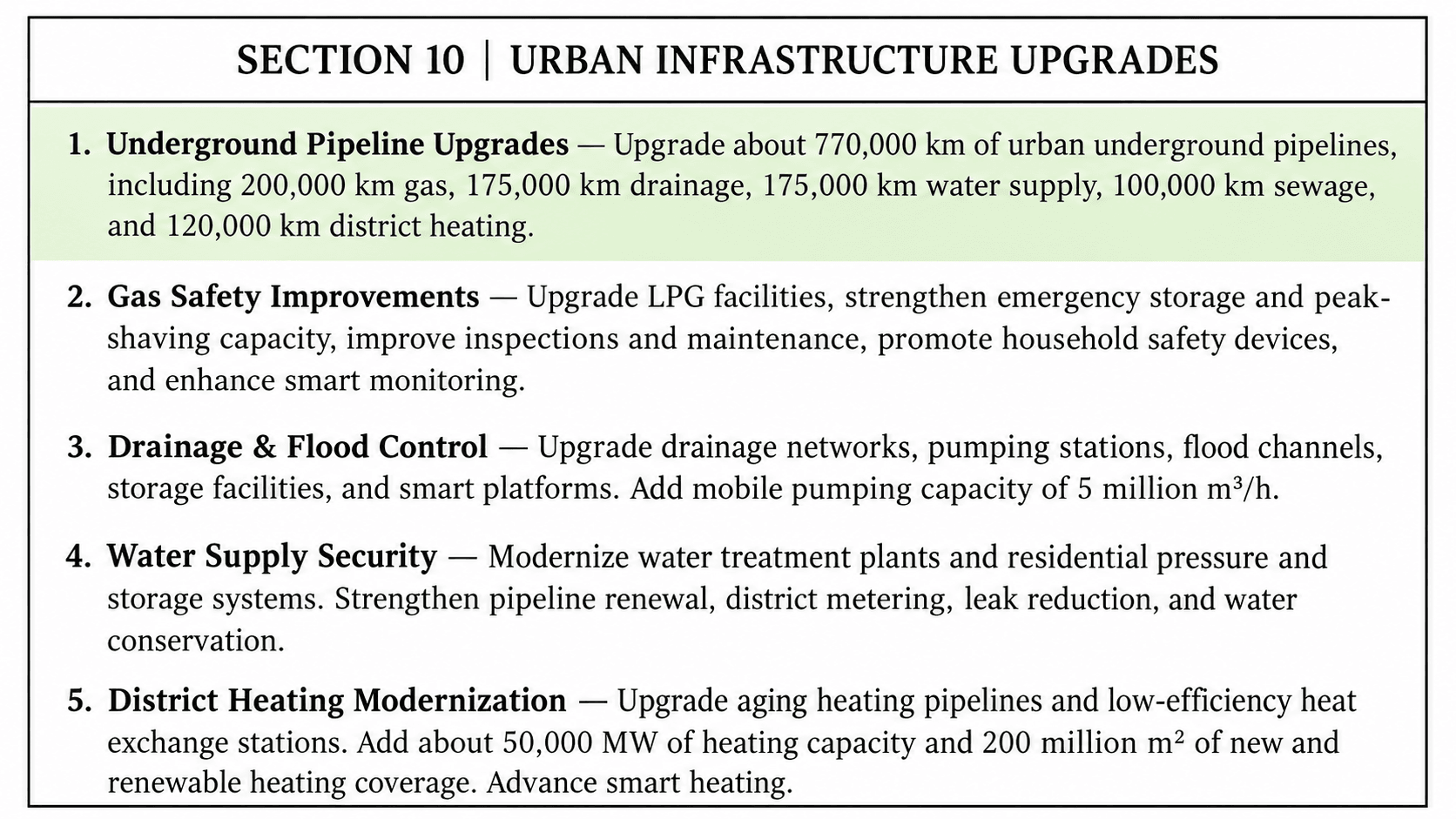
China continues to expand and upgrade its urban underground pipeline networks. According to the National Development and Reform Commission (NDRC), investment is expected to reach RMB 5 trillion during the 15th Five-Year Plan period (2026–2030), covering approximately 770,000 km of new and upgraded gas, water supply, drainage and heating pipelines.
Water supply and drainage networks depend on fittings such as elbows, tees and couplings. Welltec’s PVC-K series injection molding machines are designed for PVC pine fittings and valve bodies. From material plasticizing and mold compatibility to production management, they help manufacturers reduce material waste and production costs.
PVC-K Series Servo Injection Molding Machine | Pipe Fitting Production
01
Reduced Molding Waste
Optimized plasticizing and temperature control ensure stable PVC molding
PVC pipe fittings are sensitive to processing temperatures. Insufficient plasticizing or excessive shear heating can cause yellowing, splay marks and other defects, leading to more scarp, sorting and process adjustments while wasting valuable materials and production time.
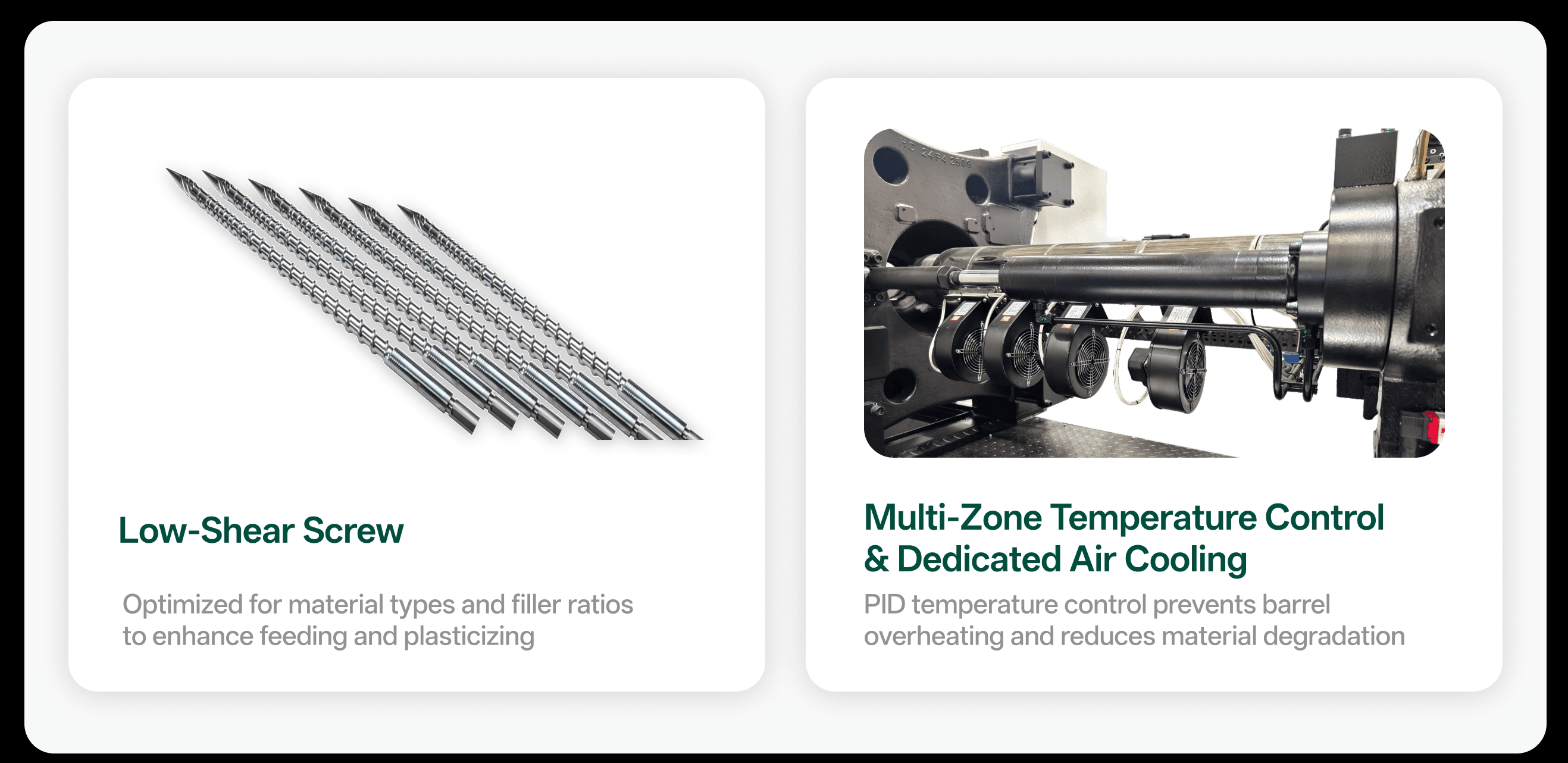
- Specialized low-shear screw for optimized plasticizing
Low-shear screw designs tailored to PVC powder, pellets and calcium carbonate content improve material feeding and plasticizing, reducing splay marks, molding defects and material waste.
- Zoned temperature control and dedicated air cooling
Integrated heating, temperature sensing and air cooling maintain stable barrel temperatures and minimize PVC thermal degradation. This reduces yellowing, scrap, material purging and process adjustments for more consistent production.
02
Streamlined Multi-Size Production
Simplified mold setup for PVC fittings
Different sizes of elbows, tees and couplings require specific mold movements, installation space and process settings. Proper machine-mold matching minimizes adjustments during production startup.
The PVC-K series offers tailored configurations for water supply and drainage fittings, supporting mold operation, installation flexibility and process setup.
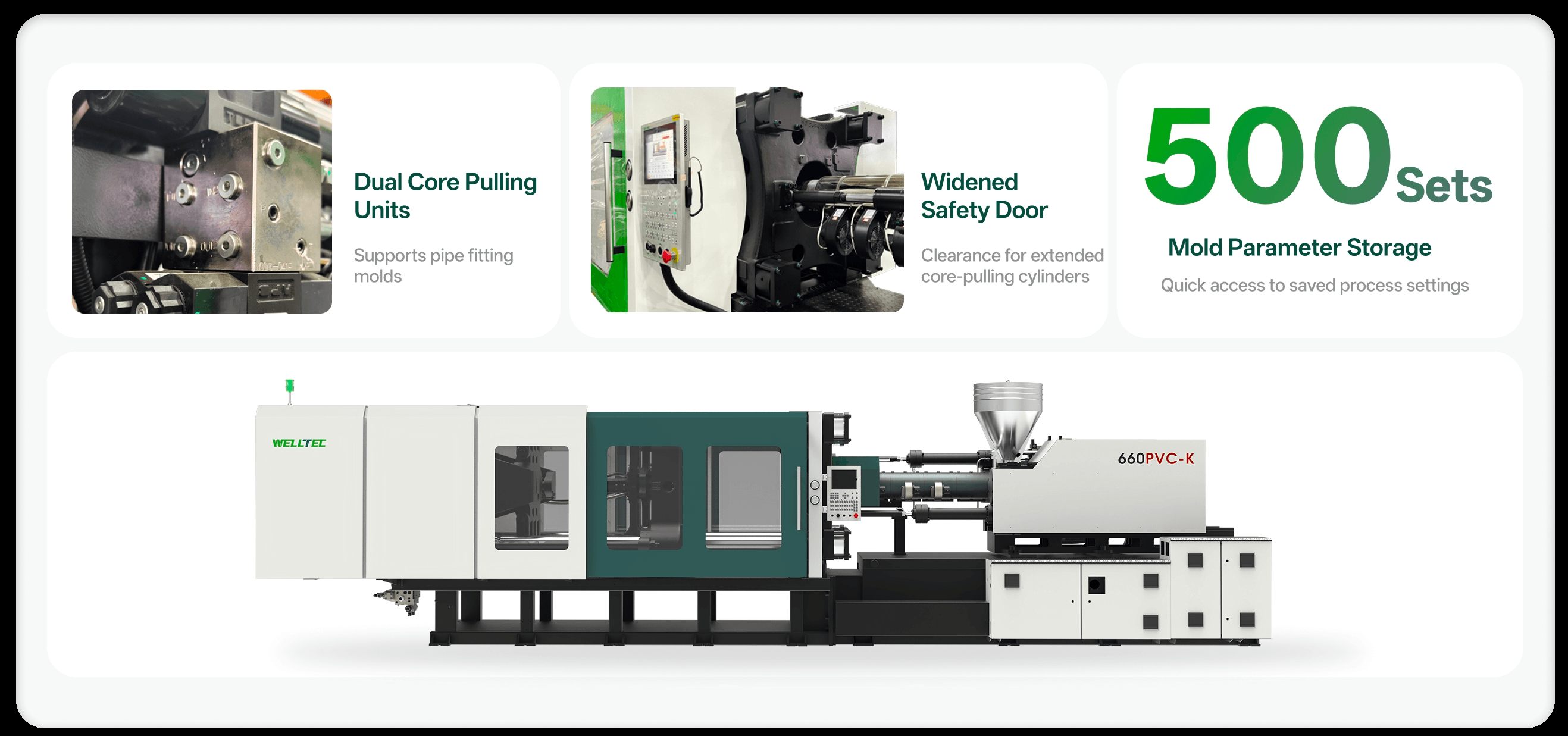
- Dual core-pulling capability
Two core-pulling circuits accommodate the specific requirements of pipe fitting molds.
- More installation space
Widened safety doors provide extra clearance for protruding core-pulling cylinders, simplifying mold installation.
- Easy parameter recall
The control system stores up to 500 mold parameter sets for quick retrieval and reduced setup time during repeat production.
Matching machine configurations to part weight, mold size and core-pulling requirements during selection minimizes adjustments after installation and supports efficient production of pipe fittings in various sizes.
03
Lower long-term operating costs
On-demand servo hydraulics save energy and simplify maintenance
In mass production of pipe fittings, energy consumption and maintenance add to ongoing manufacturing costs.
- On-demand servo hydraulics reduce energy costs
The PVC-K series adjusts hydraulic pressure and flow to match production demands, delivering 30% energy savings compared with conventional injection molding machines.
- Simplified seal replacement reduces maintenance downtime
Optimized injection unit design minimizes disassembly when replacing injection cylinder seals, reducing maintenance time and production interruptions.

04
Traceable production issues
iSee 4.0 data tracking and AI-assisted process optimization
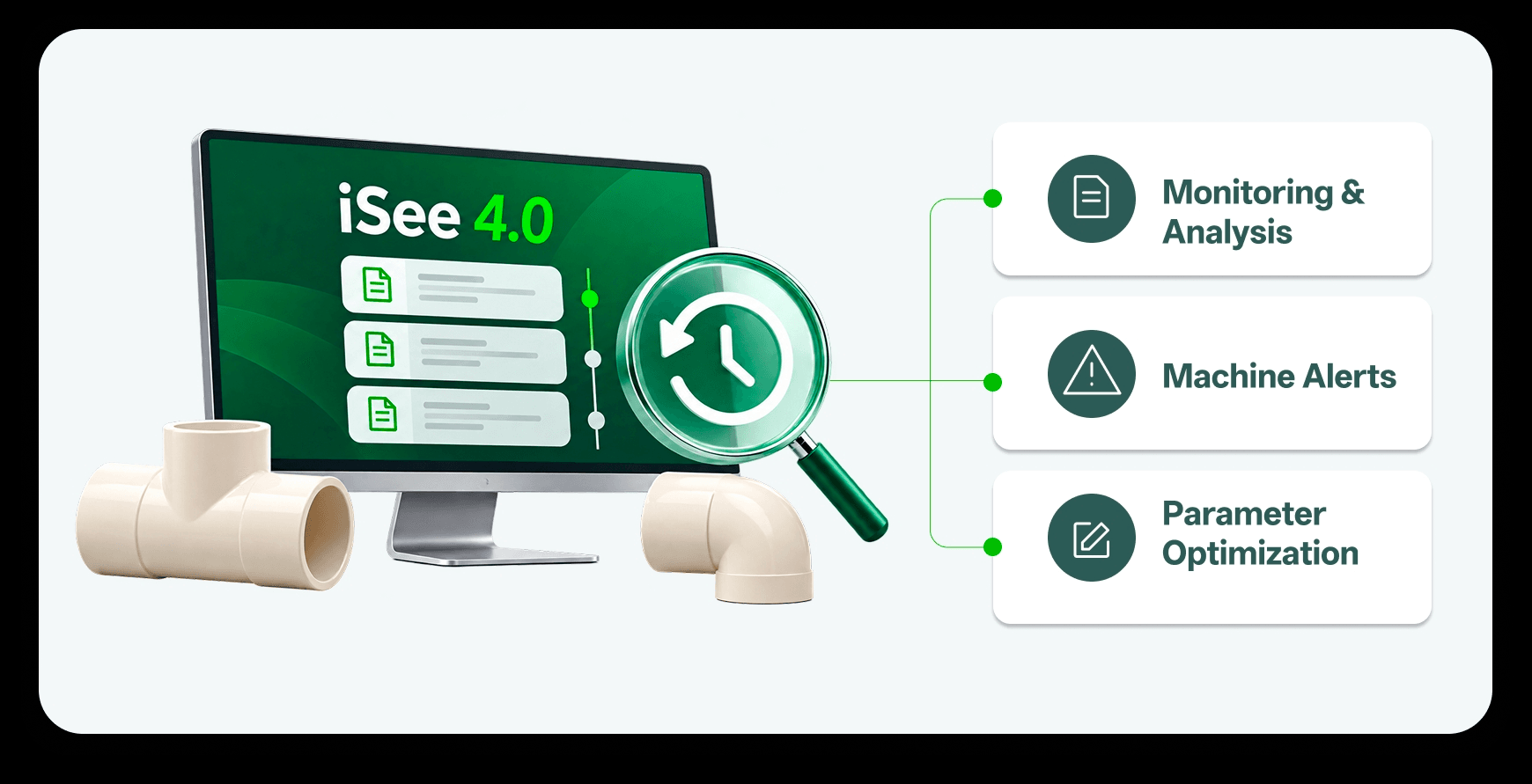
iSee 4.0: Faster troubleshooting through production traceability
When quality issues arise, iSee 4.0 provides access to historical process parameters, parameter changes and machine alarm records. Traceable production data helps identify potential causes faster and reduce troubleshooting time.
AI process optimization: Consistent quality with less waste
Elbows, tees and other pipe fittings require consistent molding quality for reliable assembly. Welltec AI continuously analyzes data from every molding cycle, generates quality scores and automatically adjusts process parameters when needed. This minimizes manual adjustments, reduces quality fluctuations and helps prevent scrap, sorting and rework.